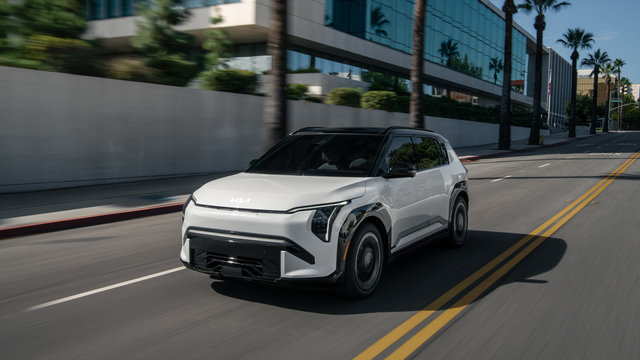
Stop-and-go traffic is exhausting in any vehicle, but it wears differently in an EV. The 2027 Kia EV5 offers one-pedal driving, a feature built for exactly this kind of driving: repeated slowdowns, short stops, and constant speed changes.
If you’re evaluating the EV5 for a daily commute in Ontario, this feature is worth understanding before your test drive. It changes how you interact with the pedals more than almost anything else on the vehicle.
What One-Pedal Driving Actually Is
One-pedal driving lets you slow the EV5, and in many cases bring it to a full stop, by easing off the accelerator instead of moving your foot to the brake. It’s a mode built into the EV5’s regenerative-braking system, which the vehicle offers with adjustable levels.
It doesn’t remove the brake pedal or replace it entirely. The physical brake is still there for hard stops, emergencies, or whenever you want more immediate deceleration than lifting off the accelerator provides.
How It Works in Plain Language
When you lift off the accelerator, the electric motor reverses its role. Instead of driving the wheels, it acts as a generator, using the car’s momentum to send energy back to the battery. That process creates drag on the drivetrain, which is what you feel as deceleration.
The EV5’s regenerative-braking system lets you adjust how strong that drag feels. A lighter setting coasts more like a traditional gas vehicle. A stronger setting slows the car more aggressively the moment you lift your foot, closer to true one-pedal behaviour.
Because the EV5 is available in both single-motor front-wheel-drive configurations and dual-motor all-wheel-drive configurations, the exact regenerative feel can vary slightly between trims. The underlying control, adjustable regeneration tied to accelerator position, works the same way across the lineup.
Why It Matters in Daily Driving
The real benefit shows up in traffic you already know: a light turning red ahead, a slow-moving lane, a line of cars braking and rolling forward again. In that kind of driving, one-pedal control cuts down how often your foot moves between pedals.
That matters more than it sounds. Fewer pedal transitions mean less physical fatigue on a long commute, and a smoother ride for anyone in the car, since gradual lift-off deceleration tends to be less abrupt than late braking.
The feel does change with the situation. Around town, at lower speeds, one-pedal driving is noticeable and useful almost constantly. On a highway stretch, where speeds stay more consistent, you’ll rely on it less; it’s a stop-and-go tool first, not a cruising feature.
Who Adapts to This Quickly, and Who Might Not
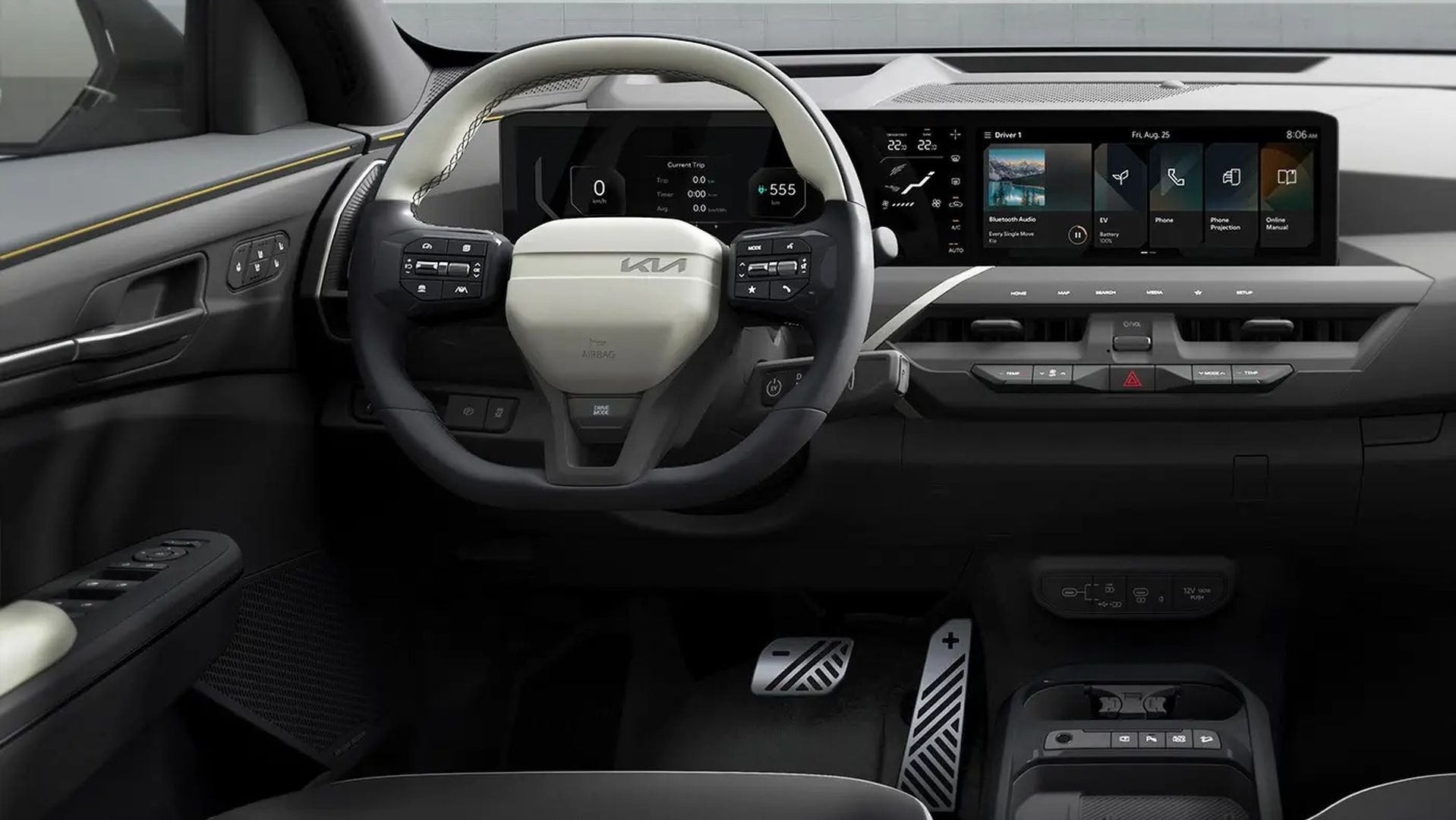
Drivers who spend most of their time in city or suburban traffic tend to pick up one-pedal driving fast. If your commute is full of lights, on-ramps, and short stop-start stretches, the pattern of lifting off early instead of braking late becomes second nature within a few drives.
Drivers used to a very traditional brake-heavy driving style, especially those who prefer coasting long distances before braking, may find the adjustment period longer. That’s not a flaw in the feature; it’s a different habit, and the EV5’s adjustable regeneration levels let you dial in something closer to a familiar feel while you get comfortable.
Neither group is locked in. Because the system offers multiple regeneration levels, you can start on a gentler setting and increase it as the behaviour becomes familiar.
Where It Fits Alongside the EV5’s Other Commuter Features
One-pedal driving isn’t a standalone gimmick; it’s one piece of how the EV5 is set up for daily electric driving. Long-range configurations offer up to 457 km of estimated range, and DC fast charging is rated at up to 350 kW, meaning a 10 to 80 percent charge takes about 30 minutes under suitable conditions. Level 2 home charging on the long-range battery takes roughly 7 hours.
Front-wheel-drive and all-wheel-drive versions are both offered, giving commuters a choice depending on driving conditions, but that choice is background context here, not the focus. The feature that actually changes your daily interaction with the vehicle is how it handles deceleration, not which wheels are driven.
What to Check on a Test Drive
Don’t just try one-pedal driving on an open road; it barely tells you anything there. Ask to drive it through a parking lot, a series of lights, or slower residential streets where you’ll actually notice the regeneration kick in and out.
Pay attention to three things: how the car handles low-speed control as you approach a full stop, how smooth the deceleration feels compared to normal braking, and whether the timing of lift-off matches how you naturally drive. Personal comfort with the system, more than any spec, will decide whether it fits your routine.
Experience the EV5’s One-Pedal Driving for Yourself
One-pedal driving is a core part of how the 2027 Kia EV5 handles everyday traffic, using adjustable regenerative braking to reduce how often you need the brake pedal in stop-and-go conditions. It’s a feature best judged by feel rather than by spec sheet.
Visit Plaza Kia in Richmond Hill to test the EV5’s one-pedal driving in traffic-like conditions, and ask about trim availability and which configuration best matches your commute.
To learn more about the 2027 Kia EV5, visit Kia.ca