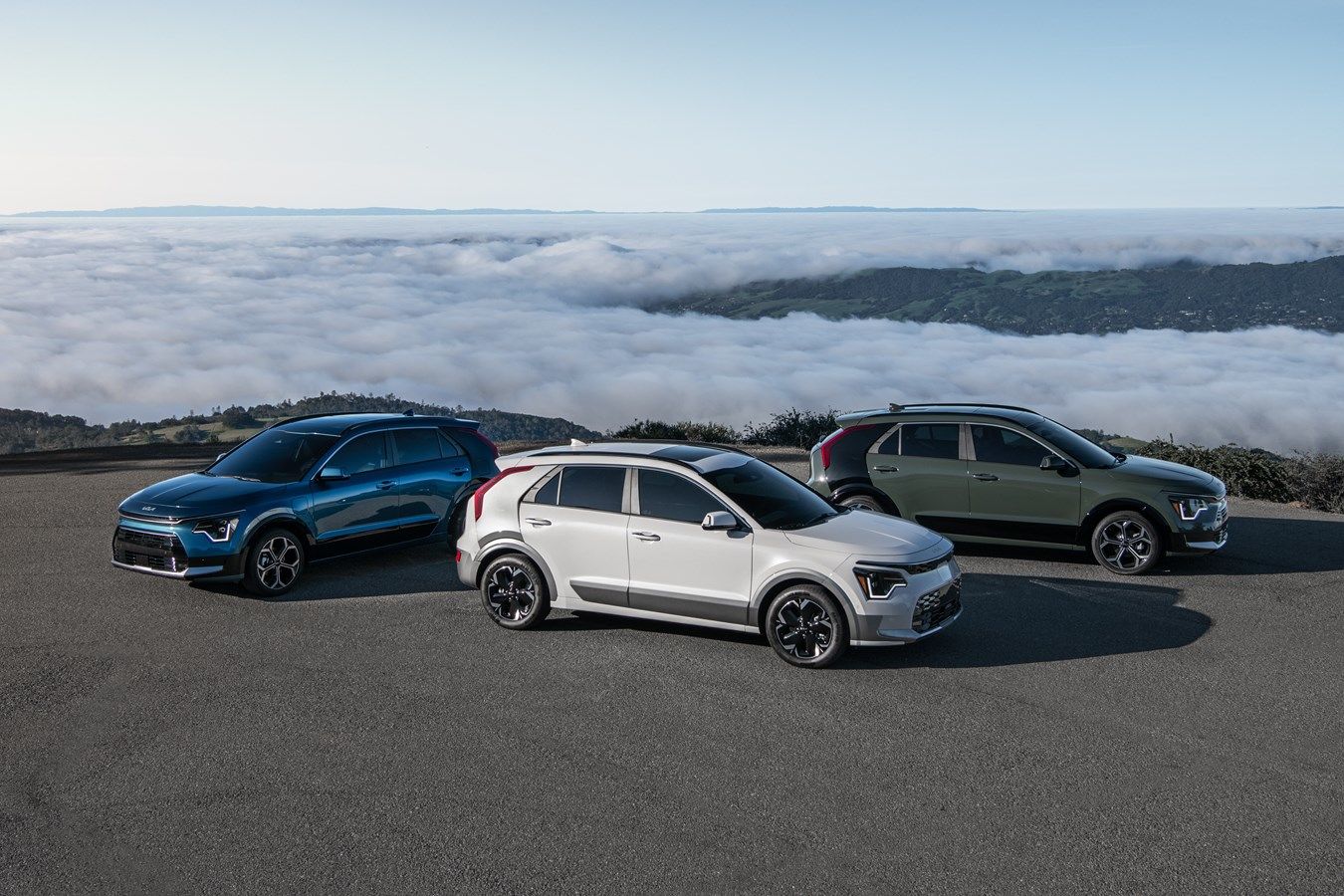
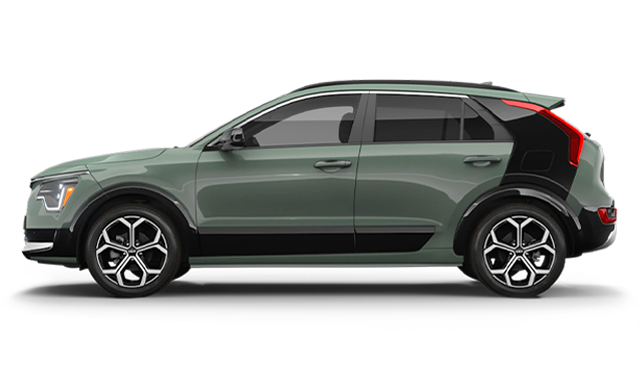
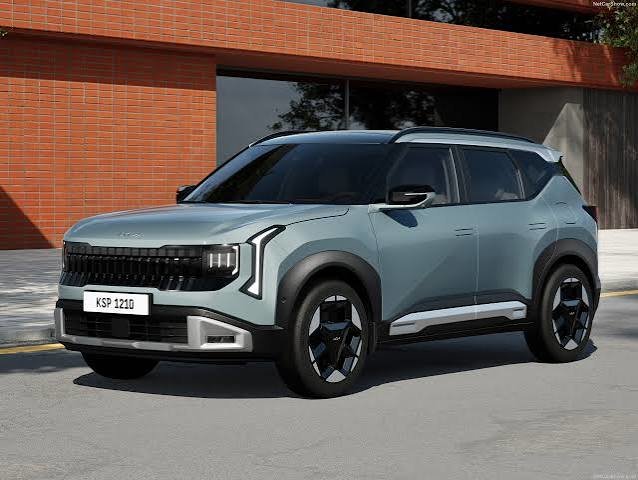
Choosing between a hybrid and a fully electric vehicle used to mean picking between two very different driving experiences. The 2026 Kia Niro closes that gap by offering both a HEV and an EV version of the same compact crossover, built on the same body with the same cargo space and the same list of comfort features. The only real question is which powertrain matches the way you actually drive.
Both versions share a five-seat layout, a spacious cabin, and Kia’s usual roster of driver assist technology. Where they differ is under the floor: one burns gasoline more efficiently than almost anything else in its class, and the other skips the pump altogether. Here’s how the two stack up so you can figure out which one fits your routine.
At a Glance: Niro HEV vs. Niro EV
|
Spec
|
Niro HEV
|
Niro EV
|
|
Powertrain
|
1.6 L GDI engine + electric motor
|
Permanent magnet AC synchronous motor
|
|
Combined output
|
139 hp
|
201 hp
|
|
Combined torque
|
195 lb-ft
|
188 lb-ft
|
|
Fuel economy / range
|
4.4 L/100 km combined (LX, EX, EX Premium); 4.8 L/100 km (SX)
|
407 km driving range
|
|
Battery
|
1.32 kWh lithium-ion polymer
|
64.8 kWh lithium-ion polymer
|
|
Cargo capacity (seats up / folded)
|
646 L / 1,805 L
|
646 L / 1,805 L
|
|
Drive type
|
Front-wheel drive
|
Front-wheel drive
|
Performance and Everyday Driving
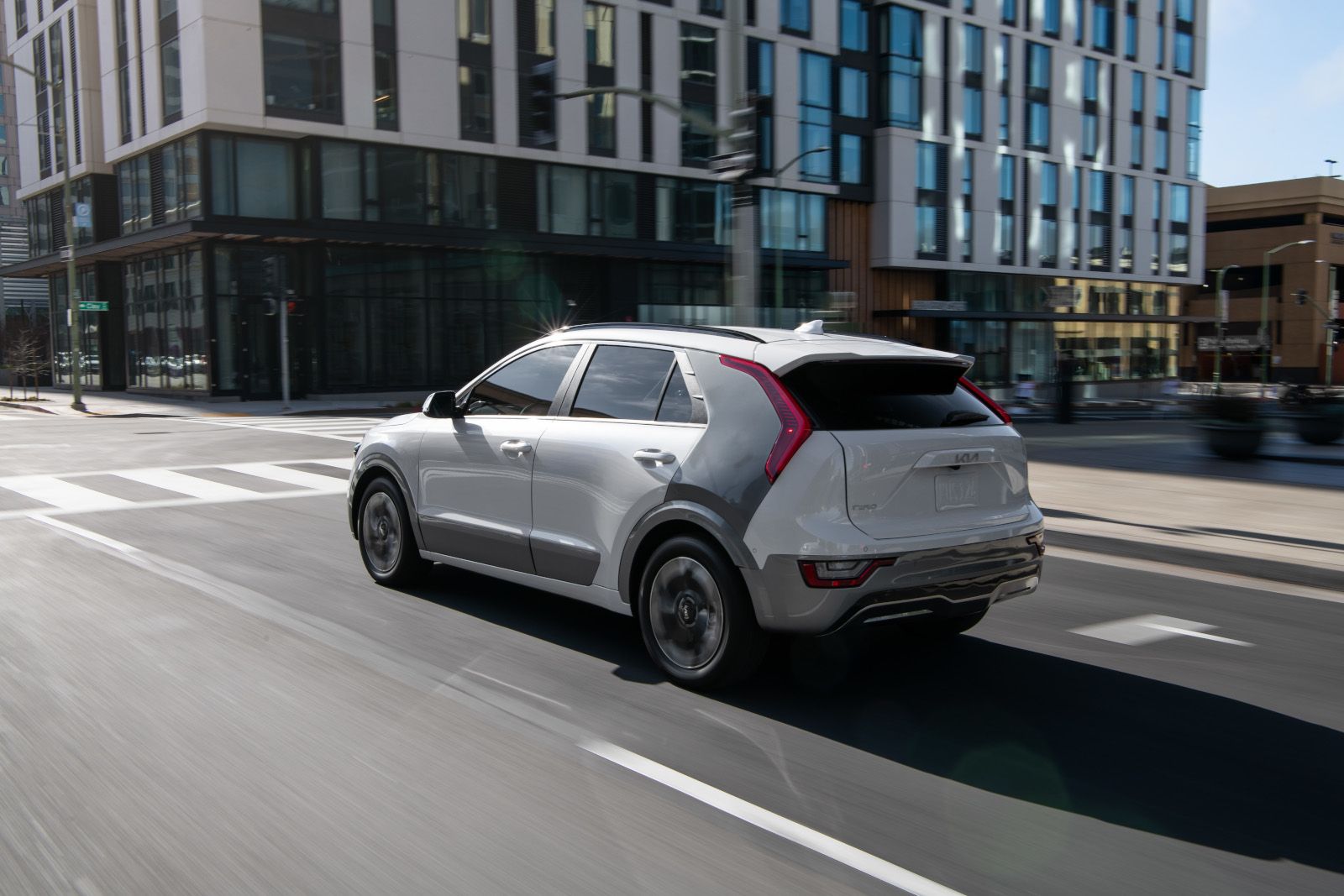
The Niro HEV pairs a 1.6-litre GDI engine making 104 hp on its own with a 43 hp electric motor, for a combined 139 hp and 195 lb-ft of torque. It never needs a plug: the 1.32 kWh battery recharges itself as you drive, and the gasoline engine steps in seamlessly whenever the electric motor needs help. Fuel economy lands at 4.4 L/100 km combined on LX, EX, and EX Premium trims, and 4.8 L/100 km on the SX.
The Niro EV trades the engine for a single electric motor producing 201 hp and 188 lb-ft of torque, giving it noticeably stronger off-the-line acceleration than its hybrid sibling. Power comes from a 64.8 kWh battery rated for 407 km of driving range, and the motor’s instant torque delivery makes it feel quicker in city driving even though the horsepower gap on paper is only 62 hp.
Charging, Refuelling, and Daily Convenience
This is where the two powertrains ask different things of your routine. The Niro HEV never needs to be plugged in. Fill the 42 L tank and drive; the battery takes care of itself. That makes it the simpler option if home charging isn’t available or if long highway trips are a regular part of your week.
The Niro EV needs a charging routine instead of a fuel routine. A Level 2 charger takes the battery from 10 to 100 percent in roughly 6 hours 5 minutes, which works well overnight at home. On the road, a 350 kW DC fast charger can take it from 10 to 80 percent in about 43 minutes.
- HEV: no charging required, 4.4 L/100 km combined fuel economy on most trims
- EV: 407 km range, 43-minute DC fast charge (10-80%) at 350 kW
- Both: identical 646 L cargo capacity with the rear seats up
Interior and Everyday Livability
Because the HEV and EV share the same body, the cabin experience is nearly identical between them. Both offer 646 L of cargo space behind the rear seats and 1,805 L with them folded down, dual-zone automatic climate control, and available features like a heads-up display, Harman Kardon audio, and a smart power liftgate on higher trims. Neither version compromises on interior space to accommodate its powertrain, so the choice really does come down to how you fuel up rather than how much room you get.
Which Niro Is Right for You?
If your driving includes regular long-distance trips, or if charging at home isn’t practical, the Niro HEV is the easier fit. It delivers strong fuel economy without asking you to change any habits.
If most of your driving is local commuting and errands, and you have access to home charging, the Niro EV offers quicker acceleration, zero tailpipe emissions, and the lowest possible running costs per kilometre. The 407 km range comfortably covers a week of typical commuting between charges.
Neither choice is a downgrade from the other. It’s a matter of matching the powertrain to how and where you drive.
Learn More at Plaza Kia
The best way to settle the HEV-versus-EV question is to sit in both and feel the difference for yourself. Visit the team at Plaza Kia in Richmond Hill to see the 2026 Niro HEV and Niro EV side by side and get your questions answered in person.
To learn more about the 2026 Kia Niro HEV, visit Kia.ca