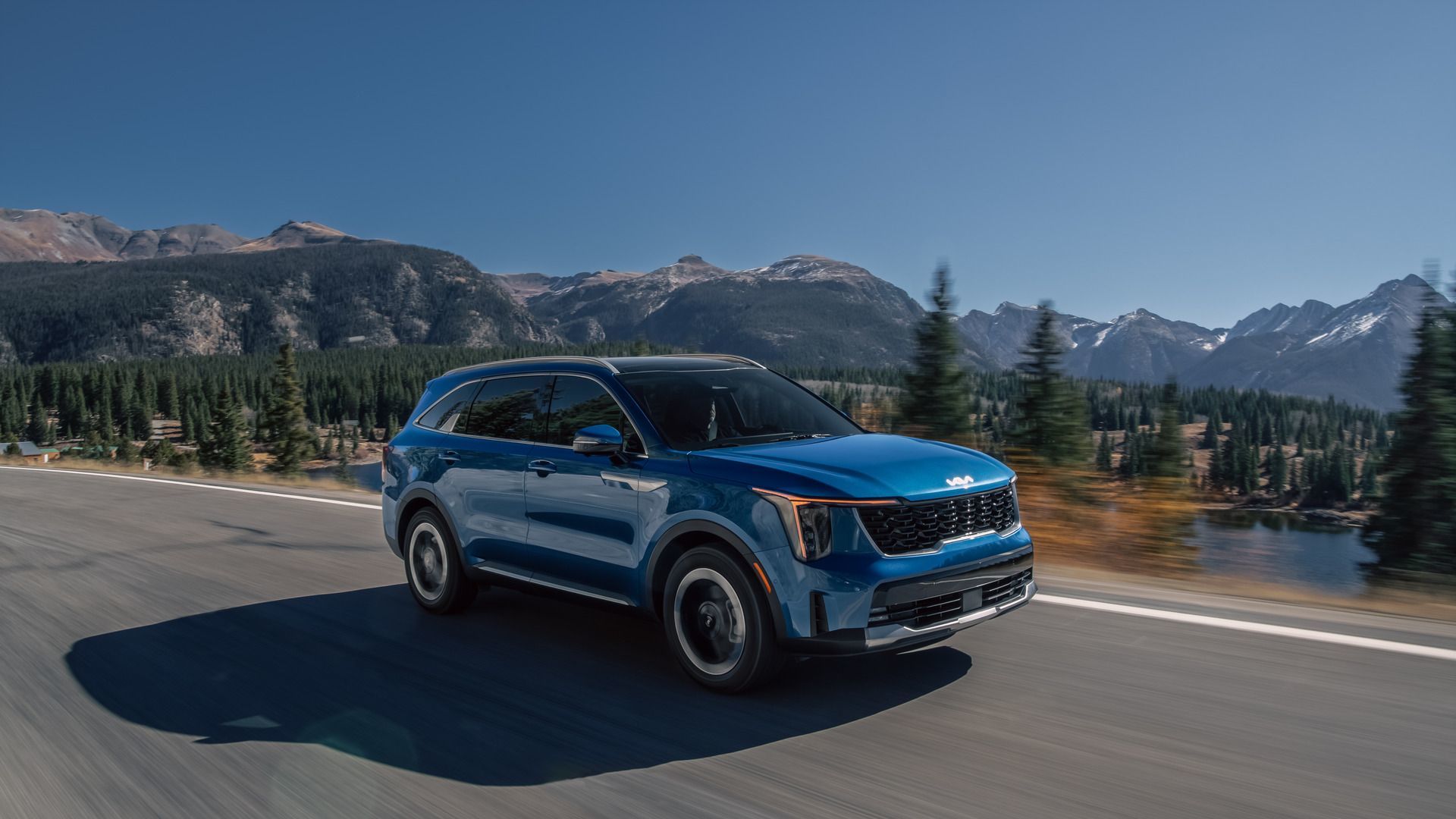
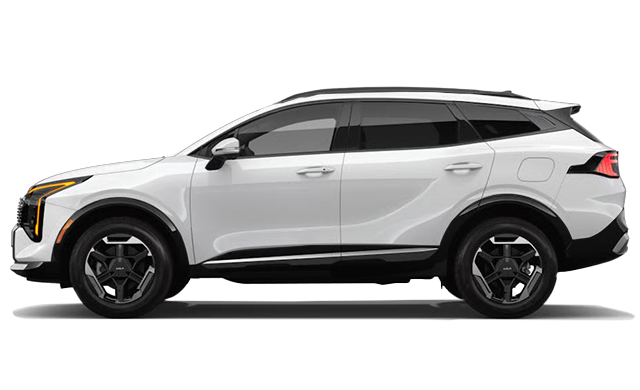
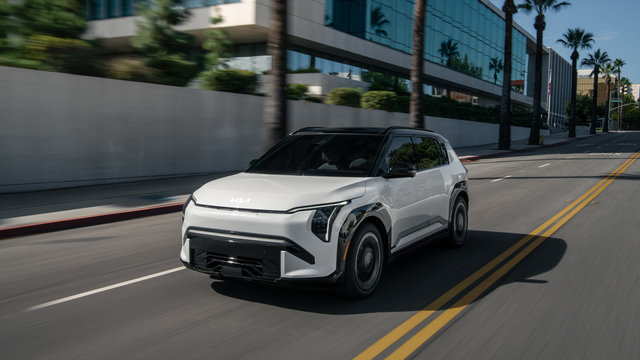
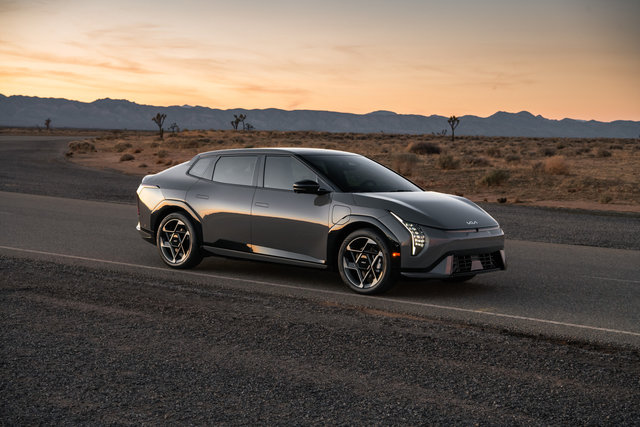
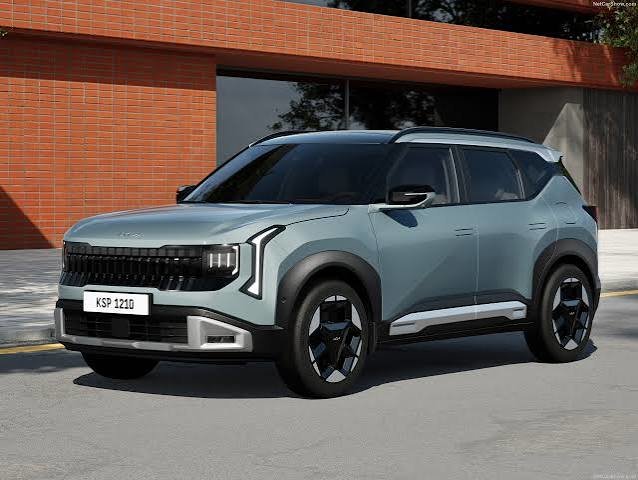
The 2026 Kia Carnival HEV answers a question the Sorento HEV can't: what happens when a family needs three full rows, 3,000 pounds of towing, and cargo space that actually fits a week's worth of gear without sacrificing the third row? For Ontario families who've outgrown the two-row-plus-jumpseats compromise, the Carnival HEV's 4,110 litres of cargo volume and eight-passenger seating make it the only minivan hybrid that scales to real family logistics.
Both vehicles share Kia's 1.6L turbo hybrid powertrain and 6-speed automatic, but the Carnival HEV extracts 242 hp and 366 Nm of torque. That gap matters when merging onto the 401 with seven passengers or towing a 3,000-pound camper through Muskoka. The Sorento HEV's 7.0 L/100 km combined fuel economy beats the Carnival HEV's 7.2 L/100 km rating, but the 0.2 L/100 km difference costs roughly $2.50 per 1,000 km - marginal for the Carnival HEV's doubled cargo capacity and superior towing.
|
Feature
|
Carnival HEV
|
Sorento HEV
|
|
Horsepower
|
242 hp 227 hp
|
|
|
Torque
|
270 lb-ft 258 lb-ft
|
|
|
Fuel Economy (Combined)
|
7.2 L/100 km
|
7.0 L/100 km
|
|
Cargo Volume
|
4,110 L
|
2,139 L
|
|
Seating Capacity
|
8 passengers
|
6 passengers
|
|
Towing Capacity
|
1,361 kg (3,000 lb)
|
750 kg (1,653-2,000 lb)
|
|
Drivetrain
|
FWD
|
AWD
|
The Power Advantage That Moves Families
The Carnival HEV's 242 hp and 270 lb-ft deliver strong acceleration when the third row is occupied and cargo loaded. Both use the same 1.6L turbocharged four-cylinder paired with a permanent magnet synchronous motor, but the Carnival HEV's larger platform and optimized hybrid calibration extract more usable power. That extra output matters during highway passing and uphill climbs, where the Carnival HEV maintains momentum without transmission hunting.
The power proves necessary when towing approaches 3,000 pounds or when seven passengers and luggage push toward GVWR. The power gap is the difference between confident merging with a loaded roof box and feeling the powertrain strain.
4,110 Litres vs 2,139 Litres: The Cargo Reality
The Carnival HEV's 4,110 litres nearly doubles the Sorento HEV's 2,139 litres - a gap that defines which vehicle functions as a true three-row hauler. With all rows in use, the Carnival HEV provides 1,139 litres behind the third row for groceries, sports equipment, and strollers. The Sorento HEV's third row folds flat to expand cargo, but with all seats up, families face the minivan-versus-SUV trade-off: sacrifice seating or sacrifice cargo.
The Carnival HEV's removable second-row seats and 60:40 split-folding third row create configuration flexibility the Sorento HEV can't match. Remove the second row, and the Carnival HEV becomes a cargo van with 4,110 litres of flat load floor - enough for furniture, building materials, or extended camping trips. The Sorento HEV's 2,139 litres handles weekend getaways, but extended family road trips require roof storage or trailer hauling.
Towing 3,000 Pounds Without the Weight Penalty
The Carnival HEV's 1,361 kg (3,000 lb) towing capacity outperforms the Sorento HEV's 750 kg (1,653-2,000 lb) range by nearly 1,000 pounds - the difference between towing a pop-up camper and being limited to lightweight cargo trailers. Both use Kia's hybrid powertrain, but the Carnival HEV's stronger frame and higher GVWR handle heavier trailers without exceeding structural limits.
The Sorento HEV's capacity covers utility trailers and small boats, but the Carnival HEV's 3,000 lb rating accommodates mid-size camper trailers, tandem-axle utility trailers, and larger watercraft. The 1,000-pound gap is the difference between towing a teardrop camper to Sandbanks Provincial Park or leaving it home. The Carnival HEV's trailer stability assist comes standard, providing necessary safety systems for confident towing on Highway 17 where crosswinds and elevation changes test trailer control.
Access Features That Solve Real Family Logistics
The Carnival HEV's dual power sliding doors and smart power liftgate eliminate parking lot gymnastics. Both doors open via key fob, interior buttons, or exterior handles, allowing parents to load children and cargo simultaneously. The Sorento HEV's conventional hinged doors require clearance space - a constraint in tight parking structures and crowded lots.
The Carnival HEV's easy walk-in second row features auto fold-and-slide functions for third-row access. Press one button, and the second-row seat folds and slides forward automatically. The Sorento HEV's seats tilt and slide manually - a daily friction point for families with elderly passengers or children in car seats. These features are the difference between loading three children, groceries, and sports equipment in two minutes versus five.
8-Passenger Seating vs 6-Passenger Capacity
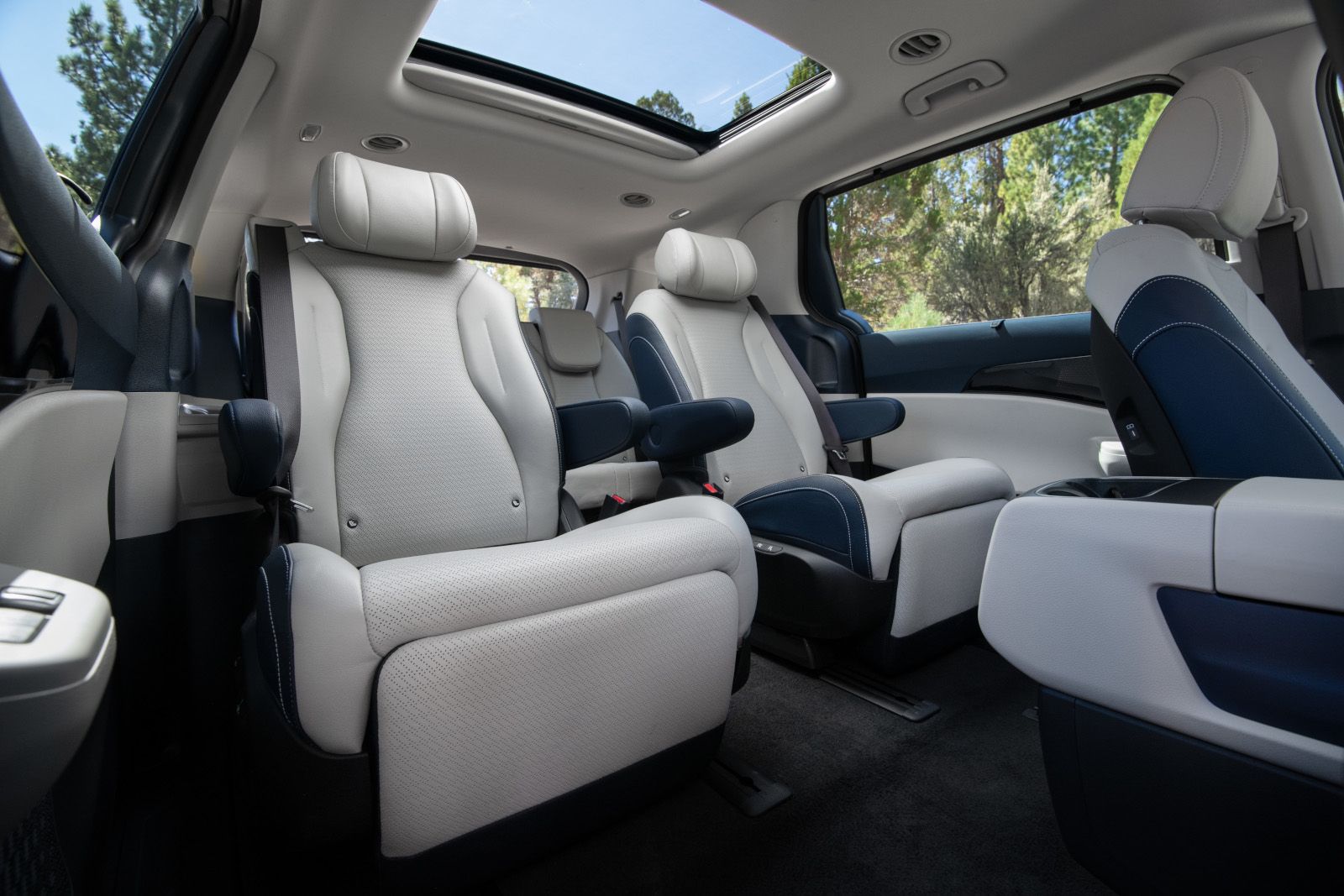
The Carnival HEV's eight-passenger capacity accommodates two additional passengers - critical for families with three or more children or those transporting extended family. The second row offers bench or captain's chairs depending on trim, while the third row provides genuine adult-size seating with adequate headroom and legroom for passengers over six feet.
The Sorento HEV's six-passenger layout prioritizes second-row comfort with captain's chairs, but the third row functions as emergency seating rather than long-distance comfort. For families needing three full rows of usable seating, the Carnival HEV's capacity and third-row legroom deliver space the Sorento HEV's compact SUV platform can't provide.
The Fuel Economy Trade-Off
The Sorento HEV's 7.0 L/100 km combined rating beats the Carnival HEV's 7.2 L/100 km by 0.2 L/100 km - a 2.9% efficiency advantage translating to approximately $2.50 per 1,000 km. Over 20,000 km annually, the Sorento HEV saves roughly $50 per year - one tank of gas traded for 4,110 litres of cargo space and 1,000 pounds of extra towing.
The gap narrows at highway speeds, where the Carnival HEV's 7.5 L/100 km approaches the Sorento HEV's 6.7 L/100 km. The Sorento HEV's aerodynamic SUV shape provides slight advantage in sustained cruising, but the Carnival HEV's lower drag coefficient than traditional minivans keeps highway consumption competitive. For families needing the Carnival HEV's doubled cargo and 3,000-pound towing, the 0.2 L/100 km difference is the cost of capability, not inefficiency.
Technology and Safety Across Three Trims
Both vehicles share Kia's 12.3-inch multimedia interface with integrated navigation, Apple CarPlay, Android Auto, and over-the-air updates. The Carnival HEV adds a Passenger View Monitor for viewing second and third-row passengers - absent in the Sorento HEV. Both include Kia Connect telematics, wireless phone charging (EX trim and above), and paddle shifters for regenerative braking control.
The Carnival HEV's safety suite includes Highway Drive Assist, Blind Spot Collision Avoidance Assist, Rear Cross Traffic Collision Avoidance Assist, Forward Collision-Avoidance Assist with car/pedestrian/cyclist detection, Lane Keeping and Following Assist, Advanced Smart Cruise Control with stop-and-go, front and rear parking sensors, and Rear Occupant Alert. The Sorento HEV matches most features and adds Parking Collision Avoidance Assist - Reverse and Surround View Monitor on SX trim.
Trim Strategy: Where Each Model Delivers Value
The Carnival HEV's three-trim lineup starts with the LX+, offering 17-inch alloy wheels, cloth seats, eight-passenger seating, tri-zone climate control, and full hybrid powertrain. The EX adds 19-inch wheels, synthetic leather, wireless charging, and rain-sensing wipers. The SX brings black alloy wheels, Dark Edition exterior, dual sunroof, genuine leather, air-cooled front seats, Bose audio, Digital Key, and heads-up display.
The Sorento HEV's EX includes LED projection headlights, laminated front glass, trailer lighting pre-wiring, and smart liftgate. The SX adds LED taillights, power-folding mirrors, panoramic sunroof, heated second-row seats, and Highway Drive Assist 2. The Carnival HEV's LX+ provides eight-passenger hybrid capability at entry price, while the Sorento HEV positions hybrid technology in higher trims with more standard equipment.
The Verdict: 4,110 Litres and 3,000 Pounds Win for Growing Families
For Ontario families needing three full rows, 4,110 litres of cargo, and 3,000 pounds of towing in a hybrid, the Carnival HEV delivers capability the Sorento HEV cannot match. The Sorento HEV's 7.0 L/100 km fuel economy and tighter turning radius serve families prioritizing efficiency and urban manoeuvrability, but the Carnival HEV's doubled cargo volume and 1,000-pound towing advantage define which vehicle functions as a true three-row hauler without daily compromises.
The 0.2 L/100 km fuel economy gap costs ~$50 annually over 20,000 km - one tank of gas traded for seating eight passengers, towing a 3,000-pound camper, and loading a week's gear without sacrificing third-row seating. For families with three or more children, elderly parents needing easy third-row access, or weekend warriors towing mid-size trailers to provincial parks, the Carnival HEV's dual power sliding doors, removable second-row seats, and 242 hp hybrid powertrain solve logistics problems the Sorento HEV's six-passenger SUV layout cannot address.
The Carnival HEV wins for families who've outgrown the two-row-plus-emergency-seats compromise and need a true three-row hybrid that scales to real family life - daily school runs with sports equipment, monthly Costco runs with bulk groceries, and summer road trips with camping gear and bicycles. Visit Plaza Kia to experience how 4,110 litres of cargo space and eight-passenger seating change the family hauler equation.
To learn more about the 2026 Kia Carnival HEV, visit Kia.ca